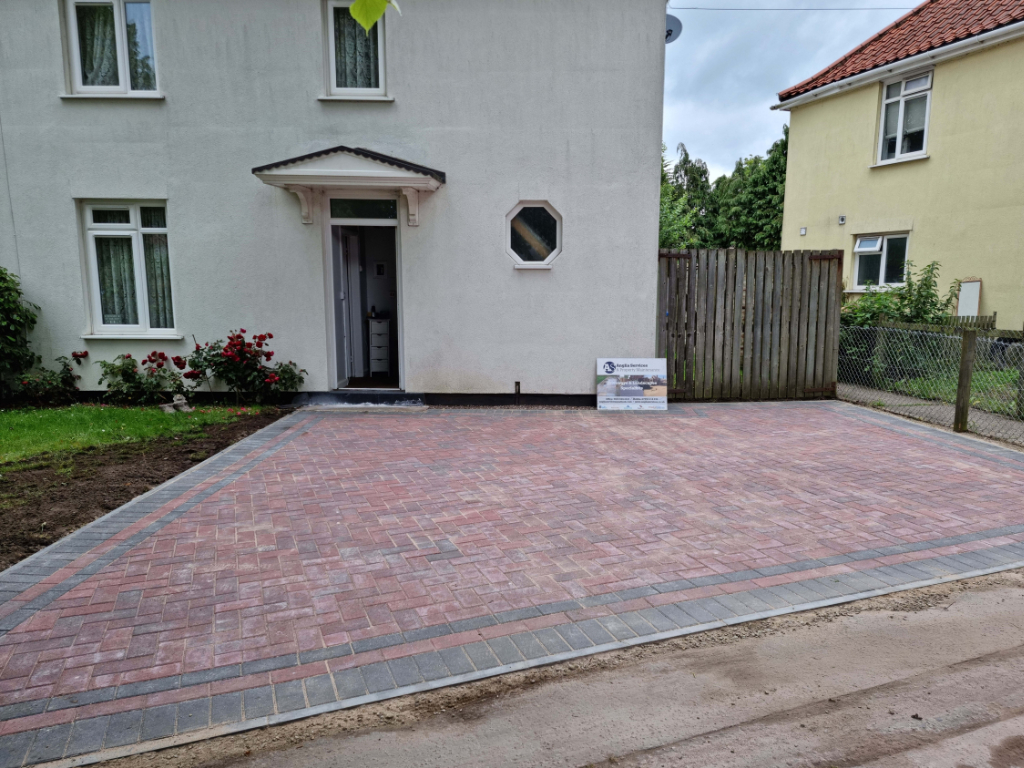
Can Sunken Block Paving Be Repaired?
Sunken block paving is a common problem that can gradually affect the appearance and usability of a driveway. Individual blocks or larger sections may begin to sit lower than the surrounding surface, creating dips where water collects and making the driveway feel uneven underfoot. The good news is that sunken block paving does not automatically mean the entire driveway needs replacing.
For homeowners in Ely, Cambridgeshire, professional block paving repairs can often restore affected areas successfully. However, achieving a lasting result depends on identifying why the paving has sunk in the first place and correcting the underlying problem rather than simply lifting the blocks back into position.
Why Does Block Paving Sink?
Block paving relies heavily on the stability of the construction beneath the visible surface. The blocks themselves are only the uppermost part of a layered driveway system.
If those supporting layers move, settle or become unstable, the blocks above can begin to follow.
Common contributing factors include:
- Inadequate ground preparation
- Poorly compacted sub-base material
- Settlement beneath the driveway
- Problems with the laying course
- Water affecting supporting materials
- Repeated vehicle loading
- Localised weakness beneath the paving
Understanding the cause is essential because different problems require different repair approaches.
How Can You Recognise Sunken Block Paving?
Subsidence within block paving is not always dramatic. It can develop slowly, making the change difficult to notice until the surface becomes noticeably uneven.
Signs worth looking for include:
- Visible dips in the driveway
- Blocks sitting lower than adjoining areas
- Water collecting after rainfall
- Uneven transitions between sections
- Movement when blocks are walked or driven over
- Changes around frequently used parking or turning areas
If a previously level driveway has begun developing these symptoms, an assessment can establish what is happening beneath the surface.
Can Individual Sunken Areas Be Lifted and Repaired?
Yes. One of the useful characteristics of block paving is that individual blocks can often be lifted without disturbing the entire driveway.
Where the problem is localised, the affected blocks can be carefully removed so the material underneath can be inspected.
Depending on what is found, the repair process may involve:
- Lifting the affected paving blocks.
- Removing unsuitable or disturbed bedding material.
- Checking the stability of the supporting base.
- Correcting any localised weakness.
- Restoring the appropriate levels.
- Re-laying the original blocks where suitable.
- Re-establishing the joints and finishing the repaired area.
The objective is to rebuild the affected section correctly rather than simply disguising the dip.
Why Simply Adding Material Under the Blocks May Not Be Enough
A sunken area might appear easy to fix by lifting the blocks, adding more bedding material and putting them back.
That approach may improve the appearance temporarily, but it does not necessarily address the cause.
If the sub-base underneath has moved or was inadequately compacted originally, adjusting only the upper layer leaves the underlying weakness in place. The paving may then begin sinking again.
Professional repairs investigate how deep the problem extends before deciding what needs to be rebuilt.
The Sub-Base Is Critical
The sub-base provides much of the structural support beneath a block paved driveway. It needs to remain stable under repeated vehicle loading.
If this layer has insufficient depth, poor compaction or localised weaknesses, movement can eventually become visible at the surface.
When repairing sunken paving, checking the base helps determine whether the problem is confined to the laying course or originates deeper within the driveway construction.
Correcting weaknesses at this stage can significantly improve the durability of the repair.
Water Can Contribute to Movement
Water management is an important part of driveway performance.
If water repeatedly collects in certain areas or reaches supporting layers in an uncontrolled way, it can contribute to movement and instability over time.
A sunken section can also create a secondary problem: once a dip forms, rainwater may begin collecting there, potentially placing further stress on the affected area.
Professional assessment should therefore consider both the structural condition and how water behaves across the driveway.
Heavy Vehicle Use Can Expose Weak Areas
Driveways experience repeated loads whenever vehicles enter, turn, park or leave. Areas that regularly carry concentrated vehicle weight can reveal weaknesses in the construction below.
Common locations for settlement can include:
- Regular parking positions
- Turning points
- Driveway entrances
- Areas where wheels repeatedly follow the same route
Correctly constructed block paving is designed to cope with normal driveway use, but weak preparation beneath the surface can become increasingly apparent under repeated loading.
Can the Existing Blocks Be Reused?
In many localised repairs, existing blocks may be suitable for reuse if they remain in good condition.
This is one advantage of block paving compared with continuous surfacing systems. Individual units can be lifted and re-laid after the underlying problem has been corrected.
Reusing suitable existing blocks can also help the repaired section blend naturally with the surrounding driveway.
However, damaged, excessively worn or unsuitable blocks may need to be replaced where necessary.
When Is a Localised Repair Appropriate?
A targeted repair can be particularly effective when:
- Settlement is confined to a specific area
- Most of the driveway remains stable
- Existing blocks are serviceable
- The underlying problem can be clearly identified
- Surrounding paving remains in good condition
In these circumstances, there may be little reason to disturb unaffected parts of the driveway.
When Might More Extensive Work Be Needed?
Localised repairs are not appropriate for every situation.
If substantial areas of the driveway are sinking, moving or becoming uneven, the issue may involve wider problems with the original construction.
Signs that a more comprehensive approach may be required include:
- Numerous sunken sections
- Widespread movement
- Repeated failure after previous repairs
- Significant drainage problems
- Large areas becoming uneven
- General instability across the driveway
A professional assessment can determine whether repairing individual sections is worthwhile or whether broader reconstruction would provide a more dependable result.
Why Uneven Block Paving Should Not Be Ignored
Sunken paving affects more than appearance.
Uneven surfaces can create uncomfortable walking areas and make movement across the driveway less straightforward. Depressions can also hold rainwater, making existing defects more noticeable and potentially contributing to further deterioration.
Addressing the problem while it remains localised can help protect surrounding areas that are still performing correctly.
Good Repairs Should Blend with the Existing Driveway
A successful block paving repair should restore both function and appearance.
Careful re-laying allows existing paving lines, patterns and levels to be maintained wherever possible. Attention to compaction and jointing also helps the repaired section integrate with the surrounding surface.
The finished area should not simply look flatter; it should have the underlying support required to remain stable during normal use.
Why Professional Block Paving Repair Matters
The visible dip does not always reveal what caused it.
Professional driveway contractors can lift the affected area and assess the construction underneath before deciding on the appropriate repair. This is particularly important where settlement is associated with base failure or water-related problems.
A thorough repair focuses on:
- Identifying the cause
- Correcting unstable materials
- Rebuilding appropriate support
- Restoring correct levels
- Re-laying blocks accurately
- Finishing the area carefully
Taking this approach gives the repaired paving a much better foundation for long-term performance.
Professional Block Paving Repairs in Ely
At Ely Driveways & Surfacing, we provide professional driveway and surfacing services throughout Ely, Cambridgeshire. If your block paving has developed dips, settlement or uneven sections, the first step is determining what has caused the movement.
Rather than simply improving the appearance of the surface, we focus on assessing the affected area and identifying the preparation required underneath. Where a localised repair is suitable, existing paving can often be lifted and carefully reinstated after the supporting layers have received the necessary attention.
Our aim is to provide practical, high-quality driveway solutions that restore both appearance and everyday usability.
Conclusion
Sunken block paving can often be repaired without replacing the entire driveway. One of the main advantages of block paving is that individual sections can be lifted, allowing the underlying construction to be inspected and corrected before the blocks are re-laid.
The key to a successful repair is understanding why the paving sank. If poor compaction, base movement, drainage or another underlying weakness is responsible, correcting that issue is far more important than simply making the surface look level again.
For homeowners in Ely, Cambridgeshire, Ely Driveways & Surfacing can assess uneven or sunken block paving and recommend an appropriate solution based on the condition of the driveway. If you have noticed dips, movement or water collecting in your block paving, contact our team to arrange a professional assessment and find out whether the affected area can be restored.
Call us on: 01353 880 898
Click here to find out more about Ely Driveways & Surfacing
Click here to complete our contact form and see how we can help with your driveway needs.